
10 Reasons Parents Are Adding This After-Throwing Cream Step Before Shoulder Guessing Takes Over An Expensive Baseball Season

No baseball parent wants to hear Little League Shoulder in an exam room. But by the time I say it, most families have already seen the small signs for weeks. The shoulder rub after practice. The quiet car ride. The “I’m fine.” The pitch count that looked safe. The ice pack he hated. Most parents are not careless. They are usually trying hard. The problem is that their routine often has a warmup, a pitch count, and a crisis plan, but no simple step after normal throwing days.
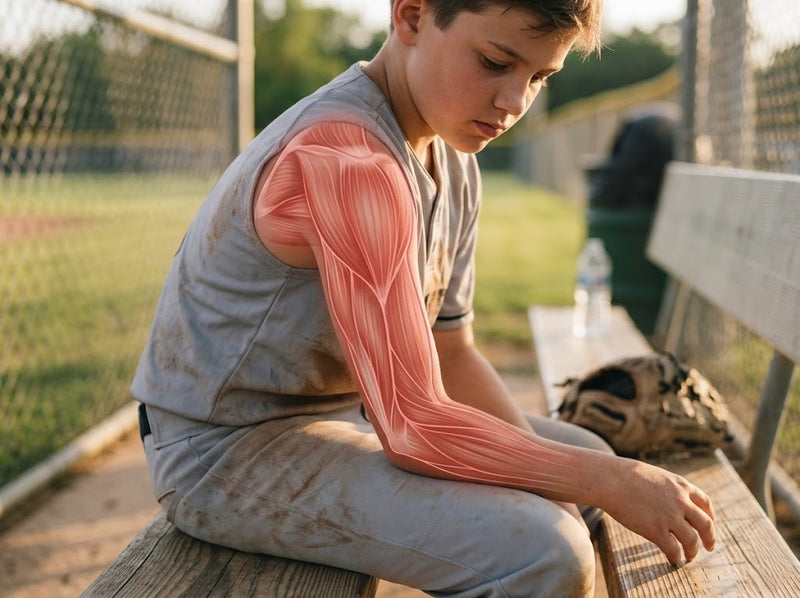
1. The First Sign Is Usually Small
Parents often expect the warning sign to be dramatic. A kid crying, refusing to throw, or saying his shoulder really hurts. Sometimes that happens, and it should be taken seriously. But many times, the first sign is quieter. He finishes practice, grabs his bag, rubs the same shoulder, and says “I’m fine.” That does not always mean injury. But when the same shoulder rub keeps showing up after throwing, it should not be brushed off as random baseball soreness.
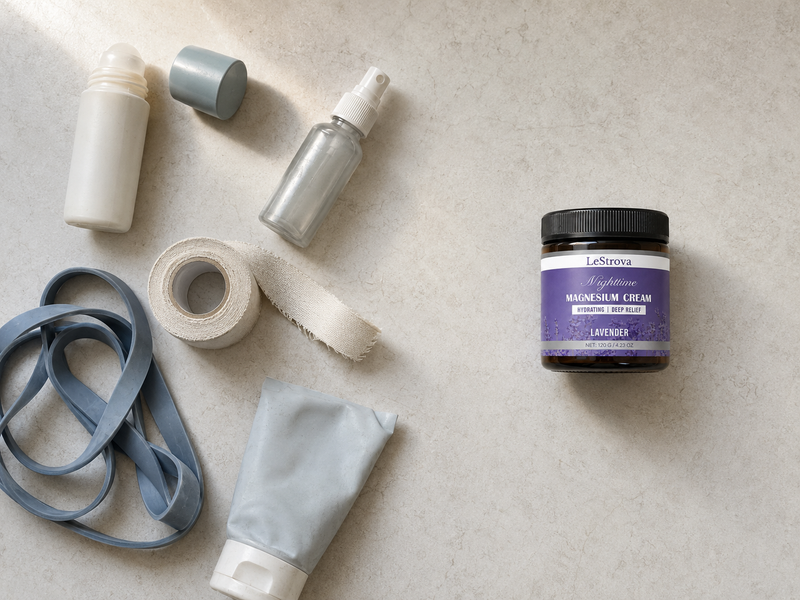
2. Most Parents Already Have Tools
The families I see usually have more arm-care tools than they realize. J-Bands, pitch counts, ice wraps, Biofreeze, Icy Hot, rest days, stretching, mechanics videos, and sometimes PT exercises. That looks responsible because it is. But when I ask what happens after an ordinary throwing day, many parents pause. They have a plan before throwing. They have a plan when something feels wrong. They often do not have a simple plan after normal throwing.

3. Pitch Counts Matter, But They Miss A Lot
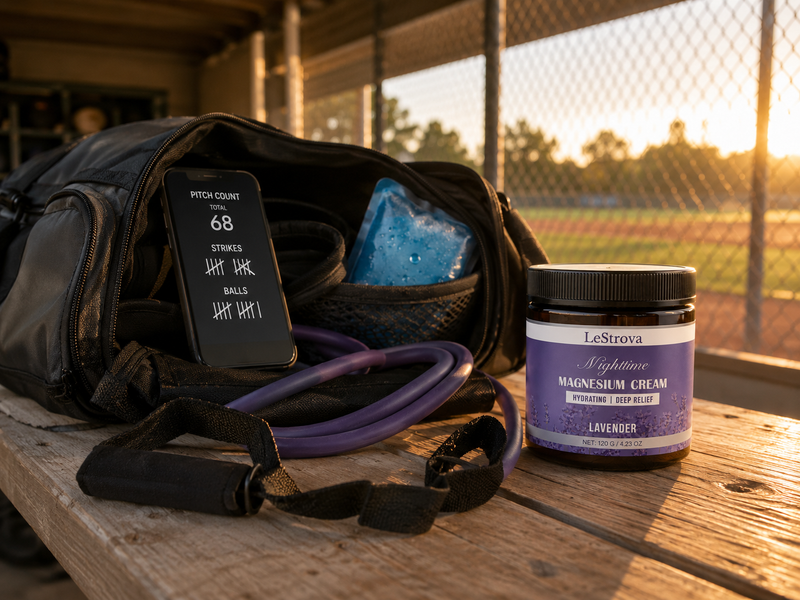
Pitch counts are important, and I want parents and coaches to respect them. But pitch counts do not usually count warmup throws, long toss, catcher throws, shortstop throws, third-base throws, bullpen tosses, practice reps, rebounder work, lessons, or backyard throws. That is why “he barely pitched” does not always reassure me. It may be true, but it may not tell the whole story. The scorebook counts pitches. The shoulder counts the whole day.
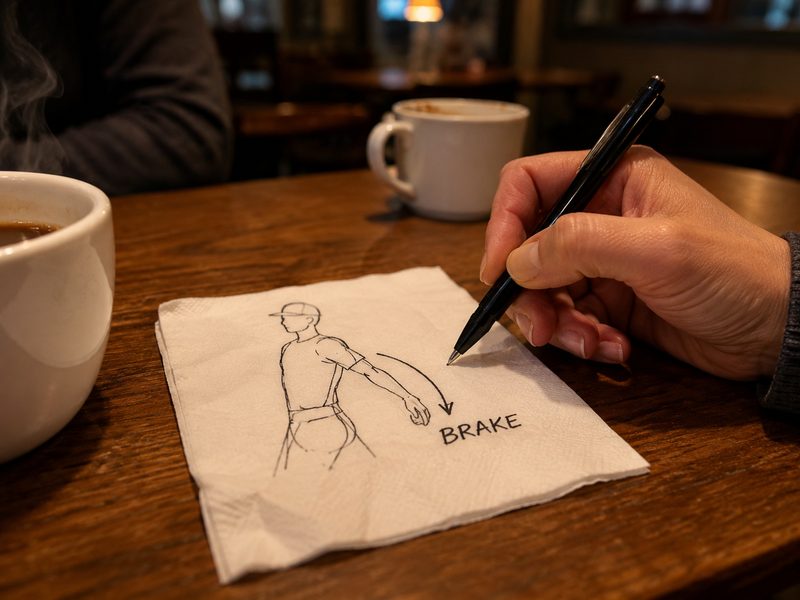
4. The Shoulder Still Works After Release
A throw does not end when the ball leaves the hand. After release, the shoulder and upper arm still have to slow the arm down. That is the brake phase, and it happens on every throw. Pitching has it. Long toss has it. Shortstop throws have it. Catcher throws have it. Warmups have it. If a routine only prepares the arm before throwing, but never helps it wind down after throwing, the routine is missing an important window.
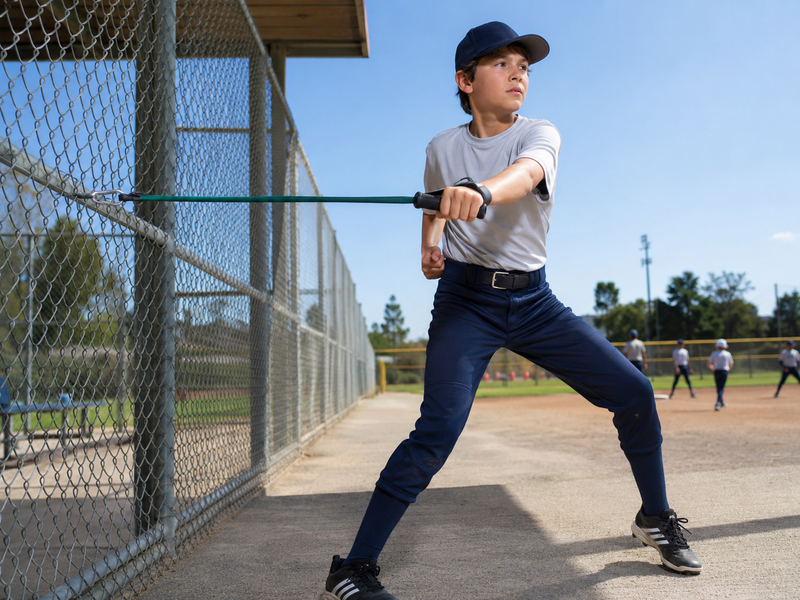
5. J-Bands Are Not The Missing Step
I am glad when parents use J-Bands before baseball. A proper warmup is better than walking straight from the car to the field and throwing hard. But J-Bands are a before-throwing tool. They do not become an after-step just because they were used earlier. Parents often tell me, “We do arm care.” But when we sort it out, most of the routine is before throwing or after something already hurts. The ordinary after-throwing slot is still empty.
6. Ice Usually Means The Parent Is Already Worried
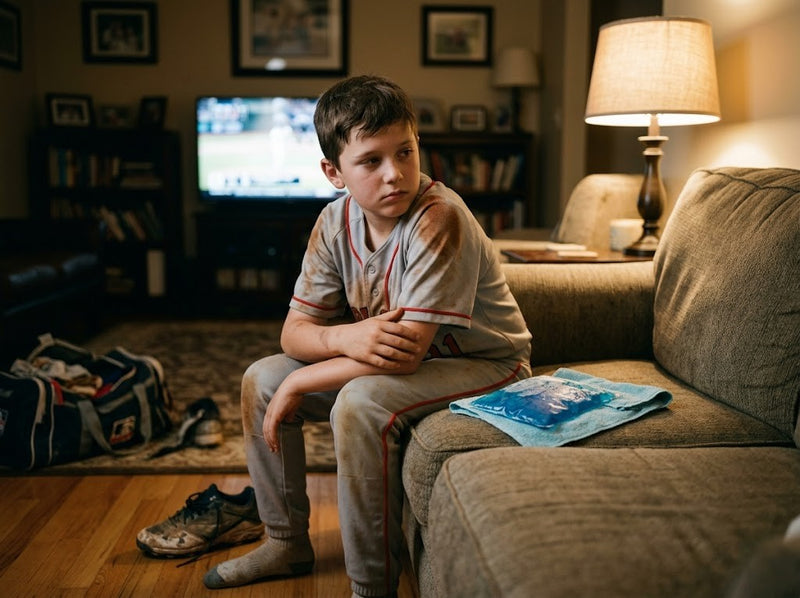
Ice can have a place, especially when a doctor, PT, or athletic trainer recommends it. But ice usually enters the routine after the parent is already concerned. For normal baseball nights, it often becomes a fight. The kid is tired, dirty, hungry, and done listening. A freezing wrap feels like punishment. So the parent lectures, the kid resists, and the routine becomes reactive. A normal after-step should not feel like a punishment.
7. Cold Rubs Can Create False Confidence
Biofreeze, Icy Hot, Tiger Balm, Deep Blue, and other sports rubs can feel strong because they create cold, warm, tingling, or burning sensations on the skin. That feeling can make parents think they are doing something deeper than they are. Most of those rubs are counter-irritants, meaning they create a surface sensation that can temporarily distract from soreness underneath. That does not make them useless. It means a loud feeling is not the same as a complete routine.
8. The Safe Use Line Matters
I never want parents using any cream, wrap, rub, or spray to talk themselves into letting a kid throw through pain. If pain is sharp, worsening, unusual, persistent, changing his throw, or keeps coming back, stop and get him evaluated. That is the doctor/PT category. The ordinary after-step is different. It belongs after baseball is over, when the kid has normal soreness or tightness from a throwing day, not when he is trying to prove he can play through something serious.
9. This Is Where LeStrova Fits
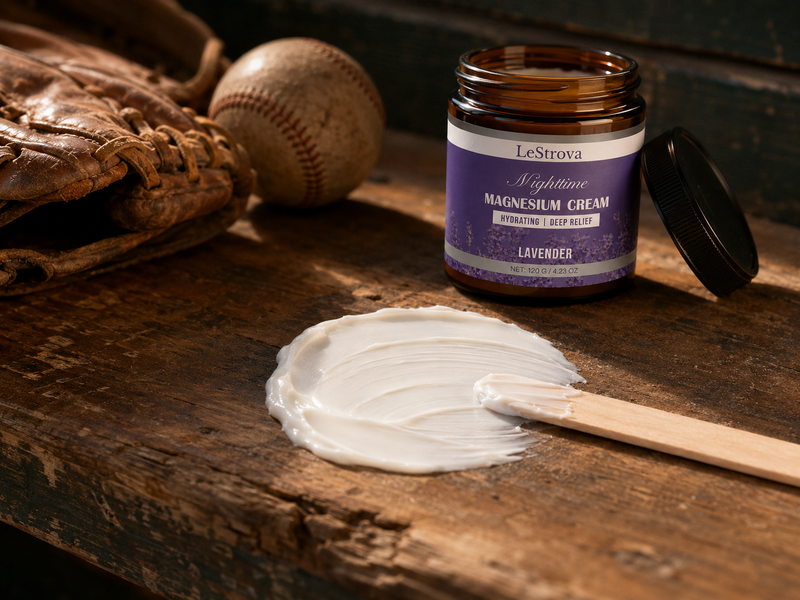
LeStrova Magnesium Relief Cream fits the ordinary after-throwing window. It is not a diagnosis, treatment, pitch-count system, ice wrap, or band routine. It is used after baseball on the throwing shoulder and upper arm for normal post-throwing soreness and tightness. The formula uses Dead Sea magnesium chloride, with 250mg magnesium chloride per teaspoon. It is cream, not spray, so parents have time to rub it in instead of watching it disappear too fast.
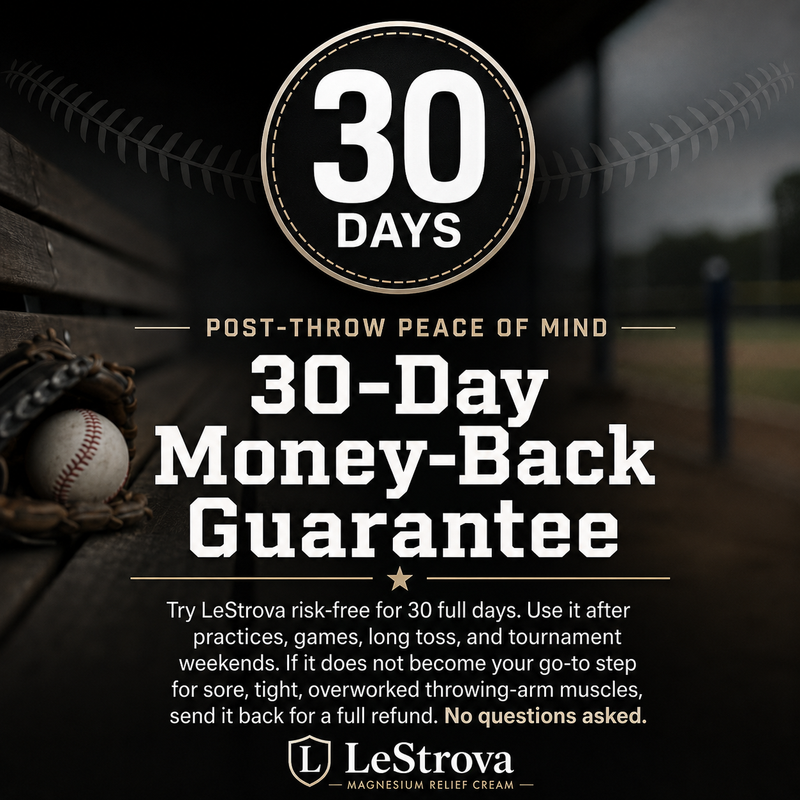
10. Outstanding Reviews And A 30 Day Money Back Guarantee
LeStrova is not a treatment for Little League Shoulder and it is not a pain test. It does not replace doctors, PT, rest, pitch counts, mechanics work, or a parent stopping a kid when something looks wrong. What it does is give families a simple after-baseball wind-down step for normal soreness and tightness. No harsh menthol burn. No ice fight. No long recovery lecture. Just a clear place in the routine after the throwing is done.

GET LeStrova NOW Buy 2 Get 1 Free
Support sore, tight, overworked throwing-arm muscles after baseball with topical magnesium comfort made for the post-throw reset.
GET LESTROVA NOW30-Day Money-Back Guarantee


Sarah K. & +10,839 CUSTOMERS